More Than a Marketplace: How Digital Spaces Are Feeding the Punjabi American Soul
Somewhere between a WhatsApp thread and an Instagram Live, Harpreet Sandhu figured out she wasn't just selling achaar anymore.
The Fresno-based home cook started jarring her mother's recipe for mixed mango pickle two years ago, mostly to keep herself busy after her youngest left for college. She listed a few jars in an online Punjabi food group, half-expecting nothing. Within 48 hours, she had 60 orders and a comment thread that read less like a shopping cart and more like a family reunion.
"People were telling me their nani made it the same way. Someone in New Jersey said she cried when she tasted it," Harpreet says. "It stopped being about the achaar pretty fast."
That shift—from transaction to connection—is happening all over digital Punjabi America right now. And it's worth paying attention to.
The Old Bazaar, Rebuilt in Pixels
Back in Punjab, whether you're from the Indian side or the Pakistani side, the bazaar was never just a place to buy things. It was where you caught up on neighborhood gossip, argued about cricket, ran into your cousin's cousin, and maybe got talked into trying something new by a vendor who'd known your family for decades. Commerce and community were inseparable.
That texture is almost impossible to replicate in a suburban American strip mall. But online? People are getting surprisingly close.
Platforms like Punjab Bazar were built on exactly this instinct—that diaspora families don't just need access to the right ingredients, they need a place that understands why those ingredients matter. The difference between buying methi leaves from a generic grocery delivery app and buying them from a space that knows what you're making them for is enormous. One is a transaction. The other is a conversation.
Ranjit Dhaliwal, who runs a small online spice business out of Sacramento, puts it plainly: "My customers don't just order from me. They ask me questions. They tell me what their mom used to do differently. Sometimes we talk for twenty minutes and they don't even buy anything that day. But they always come back."
The Langar Principle, Going Digital
The langar—the community kitchen attached to every Gurdwara—operates on a principle that's almost radical by modern economic standards: everyone eats, no one pays, and everyone pitches in. It's not charity. It's equality, expressed through food.
That spirit has found some unexpected digital translations. In private Facebook groups and Discord servers dedicated to Punjabi cooking, the sharing economy is genuinely generous. Home cooks post detailed recipes with no paywall, no email signup required. Someone in Houston will walk a first-timer in Ohio through making saag over video call. A grandmother in Yuba City will mail handwritten recipe cards to strangers who asked nicely in a comment.
Kiranjot Kaur, who moderates one of the larger Punjabi American cooking groups on Facebook, has watched this unfold for years. "When someone posts that they're trying to make their dad's recipe from memory and they can't get it right, the whole group shows up," she says. "Fifty people offering suggestions, their own versions, their own memories. Nobody's selling anything. It's just... people helping people eat something that matters to them."
She pauses. "That's langar energy. It really is."
Home Cooks as Cultural Anchors
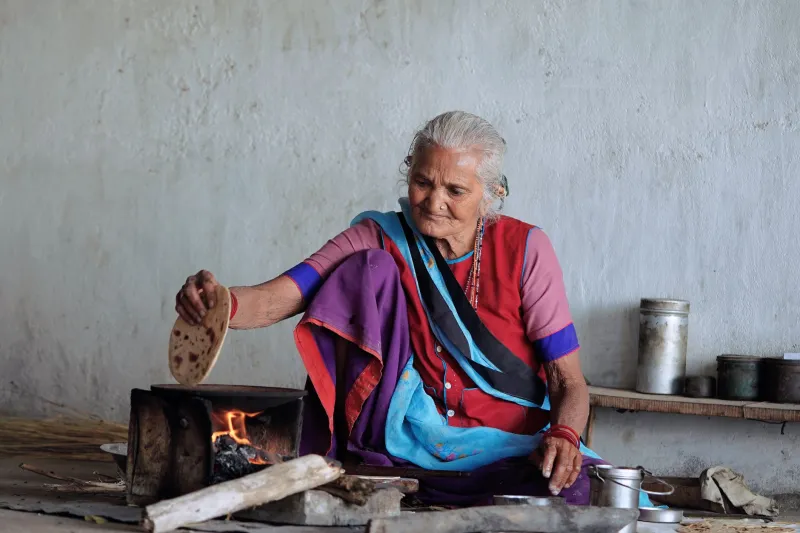
There's a particular kind of Punjabi American home cook who has become quietly essential to these digital communities. She's usually in her 40s or 50s. She learned to cook by watching, not measuring. She's been making the same dal for thirty years and it tastes different every single time in a way that somehow always works. And she has no idea how much cultural weight she's carrying.
When these women—and it is often, though not always, women—start sharing online, something shifts. Their recipes become documentation. Their techniques become tutorials. Their kitchens, filmed on slightly shaky smartphones, become classrooms for a generation that grew up eating this food but never learned to make it.
Navneet Grewal, a second-generation Punjabi American in the Chicago suburbs, credits an online home cook she's never met in person with basically teaching her to cook Punjabi food as an adult. "I watched her make dal makhani maybe fifteen times before I tried it myself. She answered every single comment I left. Now I make it for my kids every Sunday." She laughs. "She's like a maasi I found on YouTube."
That relationship—parasocial but genuinely nourishing—is one of the more interesting things happening in diaspora food culture right now.
When E-Commerce Gets Personal
Not everything in this space is purely altruistic, and that's fine. Small Punjabi American food businesses are thriving in these communities, and they're doing it by leaning into intimacy rather than scale.
The most successful ones tend to operate less like brands and more like neighbors. They remember that a customer mentioned her mother-in-law was visiting from Amritsar and follows up to ask how the dinner went. They include handwritten notes in packages. They post about their own cooking failures alongside their products. They are, in the truest sense, people selling to people.
This is a meaningful departure from how food retail usually works. And it's creating loyalty that no marketing budget could manufacture.
"I could probably sell more if I went bigger," admits Gurpreet Singh, who ships homemade Punjabi spice blends from his apartment in Queens. "But I kind of don't want to. I like knowing who I'm cooking for. I like that my customers text me when something turns out well."
What Gets Preserved When Community Gathers
Here's what's quietly remarkable about all of this: the cultural preservation happening inside these digital spaces is often more effective than formal efforts to document Punjabi food traditions.
When a home cook posts her family's version of pinni and forty people respond with their own variations—from Lahore, from Ludhiana, from families that came to California in the 1970s and families that arrived last year—you end up with something genuinely valuable. A living, argued-over, constantly updated picture of what Punjabi food actually is. Not a museum piece. A practice.
The diaspora, it turns out, may be one of the best things that ever happened to Punjabi culinary culture. Forced to be intentional about what they cook and why, scattered across a country where nothing is automatically familiar, Punjabi Americans are choosing their food traditions with a deliberateness that people back home sometimes don't need to exercise.
And they're doing it together, even when they're thousands of miles apart.
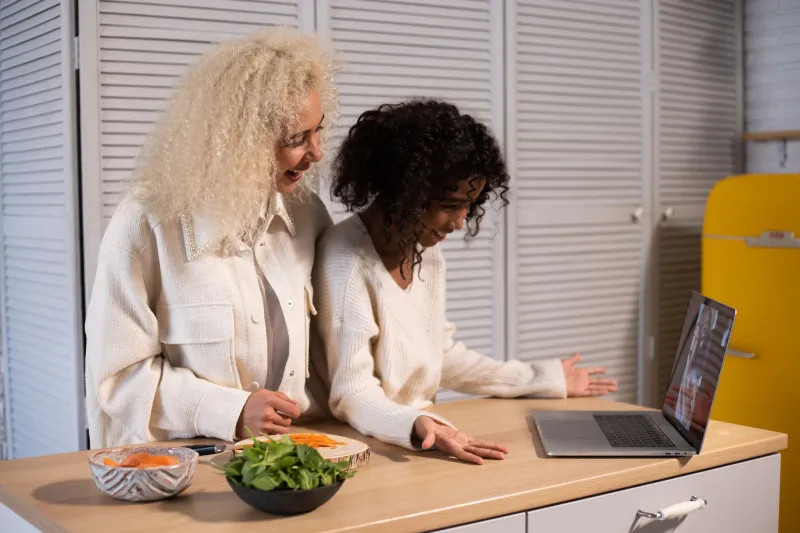
Harpreet Sandhu is still making achaar. She's also started hosting virtual cooking sessions on Sunday afternoons—no charge, just whoever wants to show up and cook together over Zoom. Last week, 34 people joined from 11 different states.
"My kitchen feels full," she says, "even when it's just me."
That's the thing about community. It doesn't actually need four walls.