Same Dish, Two Flags: How Punjabi Americans Are Cooking Through the Pain of a Divided Homeland
Somewhere in Fremont, California, Harpreet Dhaliwal is making saag the way her grandmother taught her — with mustard greens she sourced from a South Asian grocery on Mowry Avenue, a generous knob of white butter dropped in at the end, and a technique she describes as "basically chaos, but it always works." Her grandmother was from Lahore. Her grandfather was from Amritsar. They met after Partition, each carrying half a culinary world in their memory.
"When I make this dish," Harpreet says, stirring the pot with the kind of casual authority that only comes from decades of repetition, "I'm not cooking Indian food or Pakistani food. I'm cooking Punjabi food. The border came later. The saag was always there."
This is the quiet emotional arithmetic that thousands of Punjabi Americans perform every time they step into the kitchen.
A Line That Cut Through More Than Land
The 1947 Partition of British India created two nations — India and Pakistan — and split Punjab almost directly in half. Overnight, cities, villages, rivers, and farmland that had existed as a single cultural and agricultural region for centuries were divided. Roughly 14 million people were displaced in one of history's largest and most traumatic mass migrations. Families were separated. Languages were split by new national identities. And food — deeply communal, deeply geographic Punjab food — suddenly belonged to two countries that would spend decades defining themselves against each other.
The problem? The recipes didn't get the memo.
Dishes like nihari, haleem, paya, and various kebab traditions are often claimed with fierce pride by Pakistani Punjabis. Dishes like sarson da saag, makki di roti, and pinni carry strong Indian Punjabi associations. But food historians are quick to point out that most of these culinary traditions predate the border entirely — they belong to a region, not a nation-state.
"Partition created an artificial food geography," says Dr. Amara Siddiqi, a food historian based in Chicago who studies South Asian culinary diaspora. "When you're sitting in suburban Illinois and you make a dish, you're not choosing a flag. You're accessing memory. But the political baggage travels with the recipe whether you want it to or not."
The American Kitchen as Neutral Ground
For many Punjabi Americans, the United States offers something that the subcontinent sometimes can't — distance. Physical distance from the border, emotional distance from the national narratives, and the freedom to cook without declaring allegiance.
Chef Naveen Rana, who runs a Punjabi pop-up dinner series in the Chicago area, has made this ambiguity central to his entire culinary identity. His menus regularly feature dishes that would be considered "Pakistani" by one half of his audience and "Indian" by the other. He doesn't label them as either.
"I had a dinner once where I served nihari alongside sarson da saag," Naveen recalls. "An aunty from Ludhiana and a uncle from Faisalabad were sitting at the same table. They both got a little emotional. For completely different reasons. And then they both asked for seconds."
That moment, he says, told him everything he needed to know about what food can do across political divides.
The pop-up has since developed a small but devoted following among Punjabi Americans from both sides of the border — a rare social space where the cuisine itself becomes a shared language rather than a contested territory.
"Authentic" Is a Word That Does a Lot of Heavy Lifting
Walk into any comment section on a Punjabi food post and you'll find it: the authenticity debate. Someone claiming a dish is really from Lahore. Someone else insisting it originated in Amritsar. Someone else entirely arguing that the version their nani made in a refugee camp in 1948 is the only real one.
For Punjabi Americans who grew up watching their parents and grandparents navigate this, the word "authentic" carries a complicated weight.
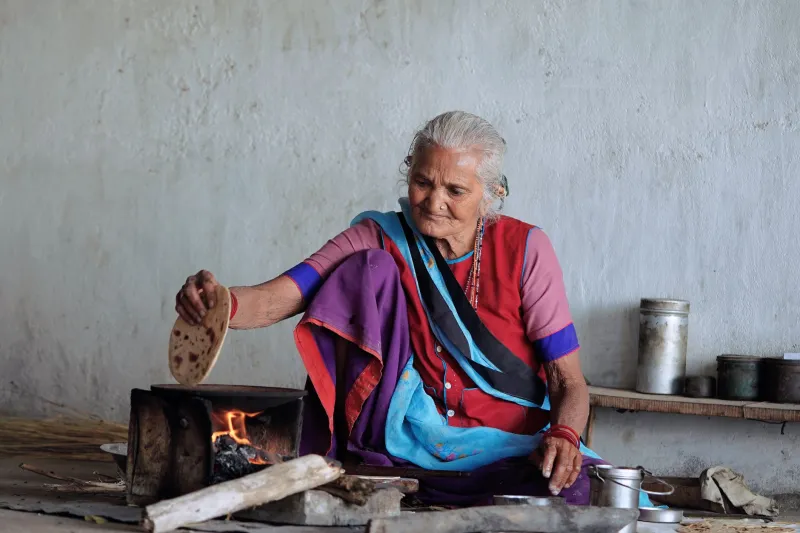
"My dadi was displaced from Rawalpindi," says Simran Oberoi, a home cook and food blogger based in New Jersey. "She made dishes that nobody on the Indian side of my family had ever heard of. Were they authentic Indian food? Were they authentic Pakistani food? They were authentic her food. That's all that matters to me."
Simran has started documenting her grandmother's recipes on her blog, deliberately avoiding any national labels. She describes the dishes by region — "West Punjab," "East Punjab" — rather than by country. The response, she says, has been overwhelming.
"I get messages from Pakistani American readers saying, 'My nani made the exact same thing.' I get messages from Indian Punjabi readers saying the same. The food remembers what the politics wants to forget."
Cooking Across the Hyphen
What's particularly striking about the Punjabi American experience is how the hyphen itself — the dash between "Punjabi" and "American" — creates room for a kind of culinary reconciliation that's harder to find on the subcontinent.
In Punjab Bazar's own community, we hear this constantly. Home cooks who grew up in Sikh families making dishes that have deep roots in Muslim culinary tradition. Pakistani American families keeping alive recipes that carry the flavor profiles of Hindu Punjabi cooking. Everyone borrowing, everyone adapting, everyone quietly maintaining a food culture that was never supposed to be divided in the first place.
"My mom makes a version of haleem that she learned from a neighbor in Chandigarh," says Gurjit Singh, a second-generation Punjabi American from the Bay Area. "That neighbor's family had brought the recipe with them from Lahore. So I'm a Sikh guy in California making a dish that traveled from Pakistan to India to America. What flag do I put on that?"
The answer, increasingly, is none.
Reclaiming the Full Table
There's a growing movement among Punjabi American food communities — informal, largely social-media-driven, but deeply felt — to reclaim the full breadth of Punjabi culinary heritage without letting the border dictate what belongs on the plate.
Food events like the one Naveen runs in Chicago, community cookbooks being compiled in cities like Houston and Toronto, and online spaces where cooks from both sides of the Partition line share recipes freely — all of it points toward a generation that refuses to cook with one hand tied behind its back.
"Punjab was one place once," Harpreet says, finishing her saag and reaching for the makki di roti waiting beside the stove. "The food still knows that. My job is just to keep making it."
She plates the dish the way her grandmother showed her — saag first, butter melting slow on top, roti on the side. No passport required. No border to cross. Just the taste of a homeland that, in this kitchen at least, was never really divided at all.
Cooking a dish that carries Partition-era history in your family? We'd love to hear your story. Share it with us at punjabbazar.com.