The Tortilla Trap: How the Pre-Made Roti Aisle Became the Most Controversial Corner of the Indian Grocery Store
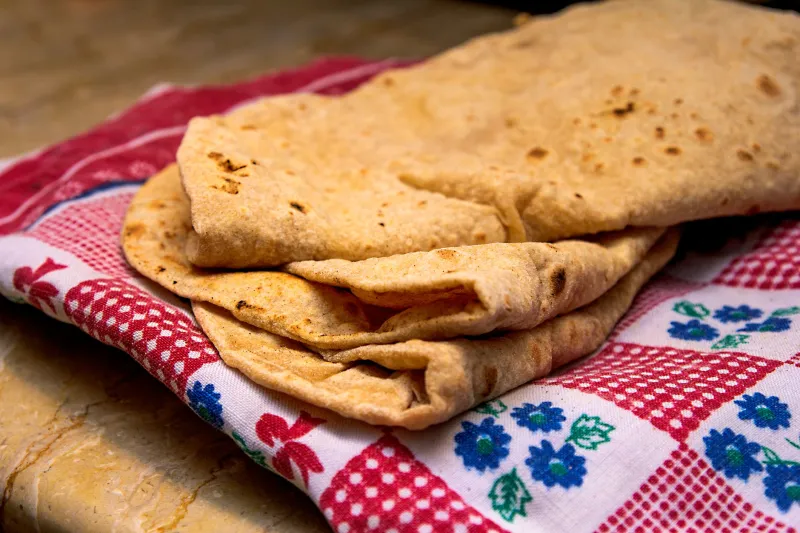
The packaging is cheerful. There's usually a smiling woman on the front, sometimes a rolling pin, always a promise that these rotis will be "soft," "fresh," and "just like homemade." They're stacked in the freezer section of Indian grocery stores from Edison to Artesia to Devon Avenue, and they move fast.
And yet, somehow, every box that goes into a cart carries a faint whiff of controversy.
The pre-made roti has arrived in Punjabi American kitchens, and not everyone is happy about it.
What's Actually in That Package
The market for ready-made roti in the US has grown substantially over the past five years. You'll find them fresh and refrigerated, frozen in packs of ten or twenty, branded by everyone from small regional producers to large commercial operations. Some are made with whole wheat atta, some with refined flour, some with added preservatives, and some that claim to be preservative-free. Prices range from a few dollars for a basic pack to upward of eight or ten dollars for products marketed as artisanal or small-batch.
The quality variation is enormous. Some hold up reasonably well—soft enough to roll, sturdy enough to scoop dal, close enough to the real thing that a tired parent at the end of a twelve-hour shift isn't going to complain. Others are thin, brittle, slightly gummy, or taste faintly of cardboard. The category is inconsistent in a way that frustrates both the people who want to defend it and the people who want to dismiss it.
"I've had frozen rotis that were honestly fine," admits Navneet Johal, a nurse in Dallas who works night shifts. "And I've had ones that tasted like they were made in a lab. It depends entirely on the brand."
The Purist Position
For many first-generation Punjabi Americans, the pre-made roti debate isn't really about bread. It's about what making roti represents—the daily act of feeding your family something you made with your own hands, the physical knowledge of how dough should feel, the heat of the tawa, the specific way a roti puffs when it's done right.
"My mother made roti every single day of her life," says Balvinder Kaur, who emigrated from Jalandhar and now lives in Stockton, California. "She didn't think of it as a skill. She thought of it as just... what you do. When I see these frozen ones, I feel something. I can't explain it exactly. It feels like giving up on something."
This is a perspective that runs deep in older Punjabi American communities. Roti isn't just food—it's a daily practice, a form of care, a thing that daughters learned by watching mothers and grandmothers. To outsource it to a factory feels, to some, like outsourcing the care itself.
The comparison to the American tortilla comes up often, and not flatteringly. "We always made fun of store-bought tortillas," says one aunty in the Chicago suburbs who asked not to be named. "And now we're buying store-bought roti? What happened to us?"
The Realist Position
What happened, in many cases, is America.
Punjabi Americans are working. Long hours, multiple jobs, commutes, kids with homework and soccer practice and doctor's appointments. The conditions that made daily fresh roti possible in Punjab—a household structure where someone was home, often a woman whose labor was dedicated to running the household—simply don't exist in the same form here.
"I work forty-five hours a week," says Mandeep Sidhu, an IT professional in the Philadelphia area. "My wife works full-time too. We have two kids. If I'm going to put a home-cooked Punjabi meal on the table on a Tuesday night, something has to give. Sometimes that something is the roti."
This is a reality that the purist argument often glosses over. Criticizing families for using frozen roti is, in many ways, criticizing them for having jobs and not having enough hours in the day—which is a harder position to defend than it sounds.
Second-generation Punjabi Americans tend to be more pragmatic about this. "I love fresh roti," says Simran Dhami, a graduate student in Austin. "I also can't make it the way my mom does. Am I supposed to eat pasta every night instead? The frozen ones get me through the week."
The Business of Convenience
The companies making these products are not oblivious to the cultural sensitivity involved. Many of them market specifically to diaspora communities, using language about authenticity, tradition, and home. Some have invested in sourcing specific varieties of atta that South Asian cooks recognize. A few smaller operations have built their entire brand around the idea of bridging convenience and quality—roti that doesn't require you to compromise.
Whether they've succeeded is a matter of ongoing debate in Punjabi American kitchens and, increasingly, on social media. Taste tests circulate on YouTube. Reddit threads get heated. Someone's auntie leaves a comment that shuts the whole conversation down.
The scrutiny is intense because the stakes feel high. Roti is not a peripheral dish. It's the center of the Punjabi meal, the thing everything else exists to accompany. Getting it wrong—or being seen to not try—hits different than buying store-bought naan for a party.
A Middle Ground That Nobody's Fully Comfortable With
What's emerging in many Punjabi American households is a quiet, unofficial compromise. Fresh roti on weekends when there's time. Frozen or store-bought during the week when there isn't. Nobody announces this policy. It just happens.
"We don't talk about it," says Navneet from Dallas, laughing. "The frozen ones are in the freezer. We all know they're there. We use them when we need to. And on Sunday, I make a proper batch and everyone acts like I'm a hero."
There's something very Punjabi American about that arrangement—the simultaneous embrace of practicality and the refusal to fully let go of the standard. The roti wars aren't going to end anytime soon. But in the meantime, dinner still gets made.