What's in Your Cup? The Morning Drink That Tells the Story of Your Punjabi American Life
It starts before the alarm. Before the news, before the commute, before any decision has to be made about who you are in this country on this particular day. It starts with a drink.
For Punjabi Americans, that first cup isn't just a caffeine delivery system. It's a small, daily act of identity — one that plays out in kitchens from Yuba City to Edison, in chai shops in Chicago's Devon Avenue corridor, and in the drive-throughs of suburban Starbucks where someone is quietly wishing the masala chai actually tasted like their mom's.
The Chai Faithful
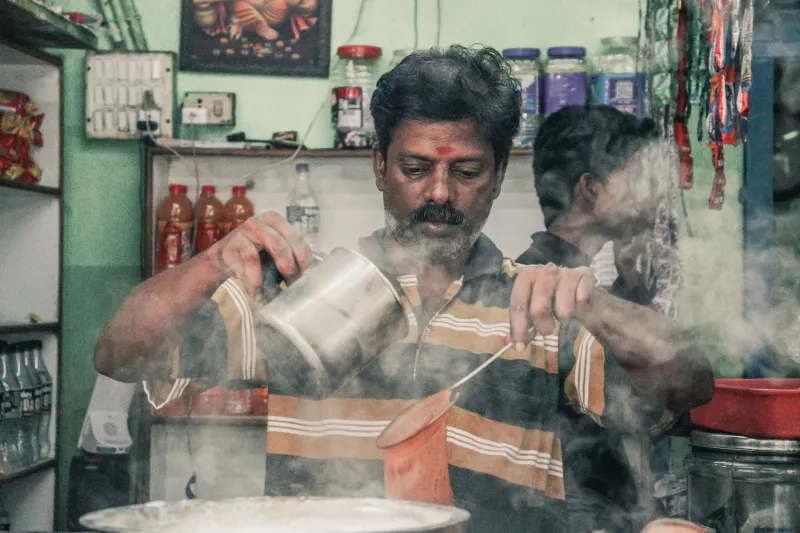
Let's start with the obvious one. Chai — specifically, the milky, spiced, stovetop-simmered version that has nothing to do with what a major American coffee chain sells in a paper cup — is for many Punjabi immigrants and their children the most loaded beverage on earth.
"I can tell you exactly what my nani's chai smelled like," says Gurpreet Sodhi, a software engineer in the Bay Area who immigrated from Ludhiana twelve years ago. "It's the first thing I smell when I go back to visit family. When I make it here, I'm not just making tea. I'm doing something else."
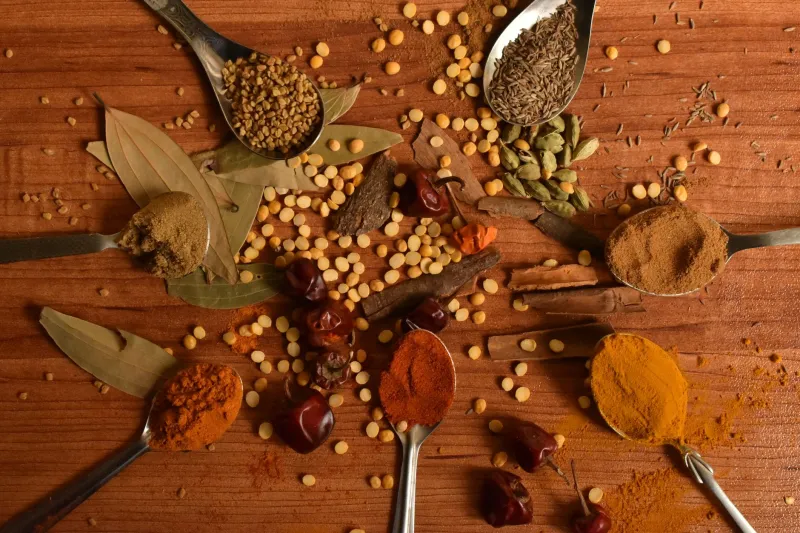
That "something else" is hard to put into words but easy to recognize. It's the act of recreating a sensory memory, of anchoring yourself to a place and a time that exists thousands of miles away. Whole cardamom pods, a knob of fresh ginger, loose black tea, full-fat milk, enough sugar to make a dentist nervous — the recipe varies by family, by region, by personal preference developed over decades. But the ritual is consistent.
For first-generation immigrants, chai is often non-negotiable. It is the morning. Everything else — the American breakfast foods, the coffee maker on the counter that came with the apartment — exists alongside it, not instead of it.
The Coffee Converts
Then there's the second generation.
"I grew up drinking chai with my parents," says Manpreet Gill, who was born in Stockton and now lives in Austin. "But honestly, when I started college, I switched to coffee. It was easier. It was everywhere. And I think — I hate to say this — but I think part of me wanted to fit in."
Manpreet is in her early thirties now and drinks both, depending on the day. But she's thoughtful about what that shift meant. "Coffee felt like the American thing to do. Chai felt like home. And for a while, I was trying to figure out which one I was."
This kind of beverage code-switching is remarkably common among second-generation Punjabi Americans. Coffee — particularly the specialty coffee culture that has exploded across the US over the past decade — offers a kind of social currency that chai, until recently, didn't carry in mainstream American spaces.
The irony, of course, is that chai has since become enormously trendy in the very American coffee shops where second-gen kids went to fit in. Except that "chai" in most of those spaces bears almost no resemblance to the real thing.
"I tried a chai latte at a place near my office," says Gurpreet. "It was sweet water with cinnamon. I don't know what that is, but it's not chai."
Lassi: The Underdog of the Morning Ritual
Somewhere in this conversation, lassi deserves its moment. Sweet lassi — cold, thick, made with full-fat yogurt, sometimes with a little rose water, sometimes just sugar and cardamom — is a morning staple in Punjab that hasn't fully made the Atlantic crossing in the way chai has.
"My dad drinks lassi every single morning," says Parveen Anand, who grew up in a Punjabi household in Fresno. "He makes it himself, in the blender, before anyone else is awake. It's a whole thing. He says it's the only thing that actually sets him up for the day."
For older Punjabi immigrants, particularly those with roots in rural Punjab, lassi carries a specific agricultural memory — it's the drink of early mornings, of physical labor, of a lifestyle that America doesn't exactly replicate. Making it here is an act of defiance against the convenience culture that surrounds them.
Sweet lassi is starting to find a small but real audience in American food culture, particularly as interest in fermented and probiotic foods has grown. A handful of Punjabi-owned businesses have begun bottling and distributing it regionally, though the homemade version remains, by most accounts, unbeatable.
The Rise of the Punjabi Café
Across American cities with significant South Asian populations, a quiet revolution is brewing — quite literally. Punjabi-owned chai cafés and hybrid chai-and-coffee shops have been opening at a steady clip over the past several years, and they're drawing customers well beyond the diaspora.
In Chicago's Devon Avenue neighborhood, a strip long known as the hub of South Asian life in the Midwest, at least three dedicated chai spots have opened in the past four years. Similar stories are playing out in Artesia, California, in the Jackson Heights neighborhood of Queens, and in pockets of Houston, Atlanta, and Seattle.
What makes these spaces interesting isn't just the drinks — it's what they represent. They're places where the morning ritual doesn't have to be hidden or apologized for. Where you can order a proper masala chai and not have to explain what you mean. Where the aunties come to gossip and the second-gen kids bring their non-Punjabi friends who leave converted.
"I wanted to create a place where people from our community didn't have to translate themselves," says Harleen Brar, who opened a chai café in the Chicago suburbs two years ago. "But I also wanted it to be a place where anyone could walk in and feel welcome. The chai does that work. It's not exclusionary. It's generous."
Harleen's café serves both traditional stovetop chai and espresso-based drinks — including a masala chai latte made with her family's spice blend that has developed a devoted following among non-South Asian customers. She's not precious about the crossover.
"If someone comes in for a cortado and leaves curious about chai, that's great. If someone comes in for chai and decides to try a pour-over, also great. The point is to be here."
A Cup Full of Questions
So what does your morning drink actually say about you? Maybe less than a think piece wants it to, and maybe more than you'd expect.
For Punjabi Americans, the choice between chai, coffee, and lassi — or the daily negotiation between all three — reflects something real about how identity works in immigrant and diaspora communities. It's not fixed. It changes with age, with circumstance, with who you're trying to be on a given morning.
Gurpreet still makes stovetop chai every day. Manpreet reaches for coffee on weekday mornings and chai on weekends when she has time to do it right. Parveen has started making her dad's lassi recipe on Sunday mornings, partly because she loves it, partly because it keeps something alive.
None of them are doing it wrong. All of them are, in their own way, answering the same question — the one every diaspora community wakes up to, every single day: how do you carry home with you when home is somewhere else?
One cup at a time, it turns out.