The Ingredient Underground: How Trusted Family Connections Keep Punjabi America's Pantries Stocked

Somewhere in Fresno, there's a woman — we'll call her Gurpreet, because she asked us not to use her real name — who receives a package from Punjab four times a year. Inside: dried whole spices, small-batch mustard oil pressed at a specific mill outside Jalandhar, a particular variety of dried red chili that her mother insists cannot be found anywhere in America, and occasionally, wrapped carefully in layers of cloth, a few kilos of hand-ground atta from a chakki that her family has used for three generations.
None of this is sold commercially. None of it has a label. And none of it would survive a strict customs inspection, which is part of why the network that moves it operates the way it does — quietly, carefully, and entirely on the basis of trust.
Gurpreet is not an outlier. She is a node in a system that stretches across Punjabi American communities from California's Central Valley to the suburbs of Toronto to pockets of New Jersey and Michigan and Texas. It is a system with no name, no headquarters, and no advertising budget. And it is feeding thousands of households with ingredients that no commercial market has figured out how to replicate.
How the Network Works
The basic architecture is simple, even if the execution requires significant coordination.
At one end, you have a family in Punjab — often a farming family or a family with direct access to agricultural producers — who maintains relationships with specific small-scale processors, mills, and growers. At the other end, you have a Punjabi American household that wants access to what those producers make. In between, there is a chain of personal relationships: cousins, in-laws, family friends, the aunty who knows the aunty who knows someone traveling to the US next month.
The transactions are rarely financial in a conventional sense. Sometimes money changes hands, but more often it's a gift economy layered over a reciprocal exchange system. You bring back sarees and iPhones when you visit Punjab; they send spices and oil and dried goods back with whoever is making the trip the other direction. The accounting is informal, the trust is absolute, and the system has been running, in various forms, for as long as Punjabi people have been immigrating to the United States.
What's changed in the last decade is scale and coordination. WhatsApp has transformed what used to be a slow, unreliable process into something approaching logistics. Group chats connecting Punjabi diaspora communities across multiple cities now function as real-time coordination platforms for ingredient sourcing. Someone in Sacramento posts that their cousin is coming from Ludhiana next week and has room in their suitcase. Within hours, there are a dozen responses from people willing to chip in for specific items.
What They're Sourcing
The ingredients that move through these networks are, almost by definition, things that either don't exist in the American commercial market or exist only in a degraded form.
Mustard oil is a significant category. The variety sold in US Indian grocery stores is technically legal but often labeled "for external use only" due to FDA restrictions on its erucic acid content — a regulatory situation that Punjabi home cooks find baffling given that mustard oil has been a dietary staple in the region for centuries. The oil that comes through informal networks is pressed from specific mustard varieties, at specific mills, and carries a flavor profile that commercial imports simply don't match.
Heirloom grain varieties are another major category. The wheat grown in Punjab and milled at traditional chakkis produces a flour with a different texture, protein content, and flavor than anything available commercially in the US. For families who grew up eating rotis made from that flour, the difference is immediately perceptible. Some families maintain near-obsessive loyalty to specific mills — their family has used this particular chakki for 40 years, and they're not about to switch because it's inconvenient to source.
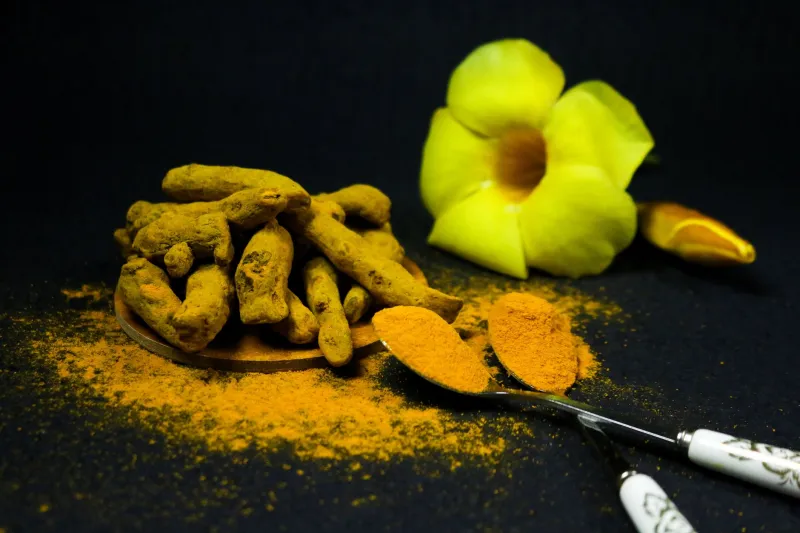
Specialty dried goods — specific chili varieties, particular styles of dried fenugreek, hand-dried mango powder, small-batch jaggery — round out the picture. These are ingredients where origin and processing method matter enormously to the final dish, and where the commercial supply chain simply hasn't caught up with what Punjabi cooks actually want.
The Trust Economy
What makes these networks function isn't logistics — it's relationships. And the rules governing those relationships are unwritten but well understood.
You don't introduce someone unreliable into the network. If a cousin vouches for a new contact and that contact proves untrustworthy — delivers the wrong items, handles the goods carelessly, tries to monetize the relationship inappropriately — the cousin's standing in the network suffers. Reputation is the currency, and it's not easily rebuilt.
You reciprocate. If someone carries a package for you, you carry a package for them, or you find some other way to balance the ledger. The exchange doesn't have to be immediate or equivalent, but the principle of mutual obligation is taken seriously.
And you don't publicize. This is perhaps the most consistent rule across every network we spoke with. The people who participate in these systems are not secretive out of paranoia — most of what they're doing is perfectly legal — but out of a pragmatic understanding that visibility changes things. The moment these networks become visible to commercial interests or regulatory attention, they stop working the way they work. So they stay quiet.
Why It Stays Hidden
There's a particular irony in the invisibility of these networks. They are feeding a meaningful portion of Punjabi American households with premium, high-quality, culturally specific ingredients. They represent a sophisticated, self-organized supply chain built on decades of trust and community knowledge. By any reasonable measure, they are a success story of diaspora community resilience.
And yet almost no one outside those communities knows they exist.
Part of this is the nature of informal economies — they don't generate press releases or LinkedIn posts. Part of it is the deliberate quietness described above. But part of it, perhaps, is that the people running these networks don't think of themselves as running anything. They're just helping their cousin get good mustard oil. They're just making sure Gurpreet's mom can send the right spices before Diwali.
The infrastructure is invisible because it's built out of relationships, and relationships don't show up on a supply chain map.
What Gets Preserved
The deeper significance of these networks isn't really about ingredients, though the ingredients matter. It's about what the ingredients carry with them.
When Gurpreet opens that package from Jalandhar, she's not just receiving cooking supplies. She's receiving a physical connection to a specific place, a specific agricultural tradition, and a specific set of relationships that span two continents and multiple generations. The mustard oil smells like her grandmother's kitchen. The dried chilies are the ones her mother has always used. The atta will make rotis that her kids will grow up associating with home.
No commercial market can sell that. No online marketplace — including ours — can fully replicate it. What these networks preserve isn't just flavor. It's continuity.
And that, in the end, is why they keep running — quietly, carefully, and exactly as they always have.