The Kitchen as Classroom: How Punjabi Families in America Are Keeping Their Language Alive One Recipe at a Time
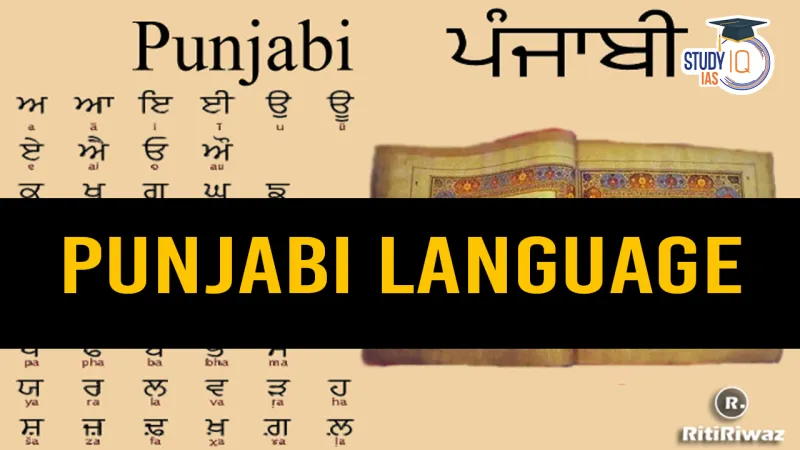
Photo: Punjabi grandmother teaching grandchild cooking in kitchen family meal preparation, via www.studyiq.com
Ask a Punjabi American kid raised in the suburbs of Sacramento or Schaumburg what jeera means, and the answer comes fast. Ask them to describe their grandmother's saag in two languages — and watch something shift behind their eyes as they search for words their tongue knows better than their brain does.
For many Punjabi families across the United States, the dinner table has become something that no Saturday language school or YouTube tutorial has fully managed to be: a living, breathing, context-rich classroom. Not by design. Just by necessity, repetition, and the sheer force of a parent saying "atta leke aa" when they need the flour passed over.
And linguists, educators, and parents themselves are starting to notice just how powerful that is.
The Vocabulary Nobody Taught Them (But They Know Anyway)
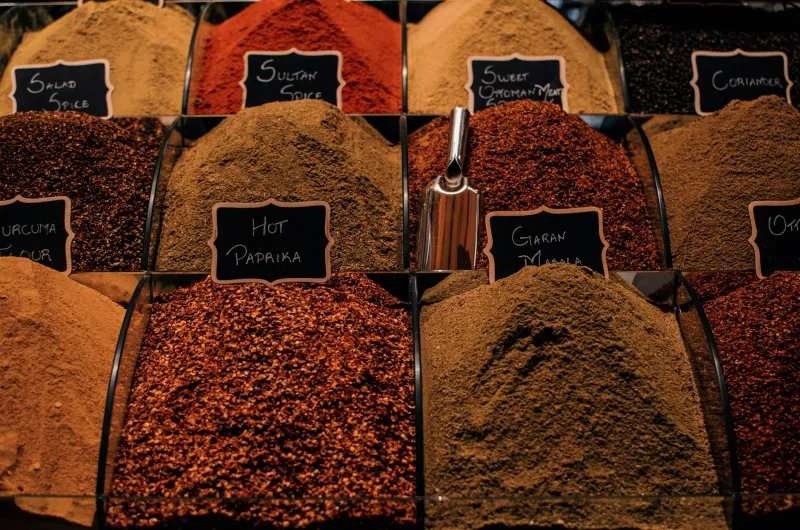
There's a specific category of Punjabi that diaspora children absorb almost by osmosis — food vocabulary. Haldi. Mirchi. Karahi. Tawa. Tadka. These aren't words pulled from a textbook. They're words shouted across kitchens, scrawled on masala dabbas, muttered under breath while someone watches a pot. They arrive without formal instruction and stick without effort.
Dr. Ravneet Kaur, a sociolinguist who has studied heritage language retention in South Asian diaspora communities, calls this phenomenon "functional vocabulary acquisition" — the way children absorb language when it's attached to action, sensory experience, and emotional context.
"The kitchen is an incredibly rich environment for language learning," she explains. "You have immediate feedback — you add the wrong thing and something burns. You have repetition — the same words used every time you cook the same dish. And you have high emotional stakes — food is love in Punjabi families. That combination is almost impossible to replicate in a classroom."
The result is a generation of Punjabi Americans who may not be able to hold a full conversation in Punjabi but can navigate a recipe, identify every spice by name, and understand exactly what "thoda namak aur" means in the middle of a meal.
The Words Come With the Smell
Priya Sandhu, a mother of two in Sunnyvale, California, didn't set out to teach her kids Punjabi through cooking. She was just cooking.
"I talk to myself in Punjabi when I'm in the kitchen," she says. "I always have. My mom did it, her mom did it. When my daughter started standing next to me asking questions, I just answered her the way I would have answered in Punjab. I didn't switch to English."
Priya's daughter, now thirteen, doesn't consider herself fluent in Punjabi. But she knows the difference between jeera and ajwain by smell alone. She knows that "masala paao" means the spice box needs to come out. She knows that when her Nani says "saag pakk gaya" she needs to turn the heat down.
"It's not full language," Priya admits. "But it's a thread. And I figure if I can keep that thread from breaking, maybe she can follow it back someday."
This metaphor — language as thread, food as the thing that keeps it intact — comes up repeatedly when Punjabi American parents talk about their kids and their mother tongue.
What Saturday School Can't Do
There are Punjabi language schools scattered across the United States, often attached to Gurdwaras, that work hard to give diaspora children formal instruction in Gurmukhi script and conversational Punjabi. The educators who run them are dedicated, often volunteer-based, and deeply aware of the challenge they're up against.
Gurpreet Singh, who teaches Punjabi at a Gurdwara-based language program in Fresno, has been doing this for eleven years. He's seen what works and what doesn't.
"The kids who retain the most are always the ones who use it at home," he says, without hesitation. "Not the ones who study the hardest in class. The ones whose parents cook with them in Punjabi, whose grandparents are in the house, whose family doesn't switch to English the moment they walk through the door."
He's started incorporating food-based lessons into his curriculum — teaching vocabulary through recipes, having students describe dishes in Punjabi, asking them to interview a family member about a traditional food and report back. The engagement, he says, is noticeably higher.
"When I say 'write ten Punjabi words,' I get resistance. When I say 'ask your Nani how she makes her pinni and write down what she tells you,' they come back with thirty words they actually remember."
The Grammar Hidden in the Recipe
What makes food vocabulary particularly powerful as a language anchor is that it doesn't exist in isolation. Recipes carry grammar. Instructions require verbs. Descriptions demand adjectives. A parent saying "pehle pyaaz bhuno, phir tamatar paao" is delivering a full grammatical sentence with tense, sequence, and command structure — and the child absorbs it because they're watching the onions brown.
"There's a whole sentence structure embedded in how Punjabi cooking is talked about," says Dr. Kaur. "The imperative mood is everywhere — stir this, taste that, turn the heat down. That's actually quite sophisticated grammatical territory, and kids are navigating it naturally because the context makes the meaning obvious."
Parents who've noticed this are starting to be more intentional about it. Some narrate their cooking out loud in Punjabi even when their kids aren't actively listening. Others have made a rule: in the kitchen, only Punjabi.
Why Food Holds the Memory When Words Don't
There's something else happening in these kitchens beyond language acquisition, and it might be even more important. Food carries cultural memory in ways that language instruction alone cannot. The smell of garam masala hitting hot ghee doesn't just teach a child the word tadka — it connects them to something larger, older, and harder to name.
"My son doesn't speak Punjabi," says Mandeep Gill, a father in Naperville, Illinois. "But when he eats my mother's dal, he knows he belongs to something. I don't have another word for it. He just knows."
That sense of belonging — transmitted through taste, smell, repetition, and the specific chaos of a Punjabi family kitchen — may be the most durable thing these households are passing on. The language is in there too, threaded through every instruction, every ingredient name, every "bas, bahut ho gaya" when the food is finally, perfectly done.
It's not a substitute for formal language education. But it might be the reason any of it sticks.