Sarson for $8 a Bag: What Punjabi Americans Are Actually Paying to Eat Like They're Home
Let's start with the sarson.
A kilogram of mustard greens in Amritsar might cost you the equivalent of fifty cents on a good day. The same quantity—or something approximating it—in a Punjabi American kitchen in New Jersey can run anywhere from five to twelve dollars, depending on whether you're buying it fresh from an Indian grocery, frozen from a specialty store, or paying for the imported dried variety that some families swear is the only one that tastes right. And that's before you add the maize flour, the makki di roti, the dollop of white butter that has to come from a specific brand or it doesn't count.
Sarson ka saag is just one dish. Multiply that premium across an entire Punjabi pantry and you start to understand why so many diaspora families treat grocery shopping like a financial strategy session.
The Math Nobody Warned You About
When Punjabi families emigrated to the United States, they brought their food culture with them—but the economics of that food culture did not make the trip. Ingredients that were abundant, cheap, and locally grown in Punjab are now imported goods carrying the full weight of international shipping, customs, storage, and retail markup.
Take basmati rice. Not any basmati—the specific long-grain, aged variety that many Punjabi families consider the only acceptable option for a proper dish. In India, a five-kilogram bag of decent basmati might cost the equivalent of four or five US dollars. In American stores, a comparable product—if you can find it—often runs fifteen to twenty dollars or more for the same quantity. Premium aged varieties from specific regions command even higher prices.
Or consider moong dal. Simple, nutritious, a staple in countless Punjabi households. The price differential between what a family might pay at a local market in Punjab and what they pay at an Indian grocery in the Midwest can be three to four times higher, sometimes more. That gap widens further if a family is particular about sourcing—some won't buy the domestic or Chinese-grown versions that are often cheaper on American shelves.
"We know exactly which dal is which," says Gurjit Singh, who runs a small catering operation in the Sacramento area and sources ingredients for both personal and professional use. "The texture is different. The way it cooks is different. My family can taste the difference. So we pay for the imported kind."
The Strategies Families Develop
Punjabi Americans have not simply accepted these prices as the cost of doing business. Over years and decades, diaspora communities have developed a sophisticated set of workarounds that range from the practical to the almost theatrical.
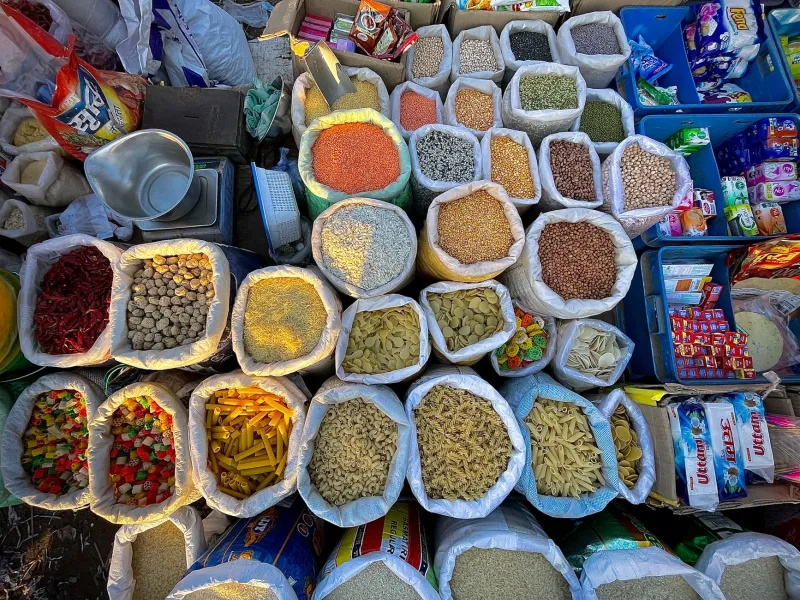
Bulk buying is the most common strategy. Families coordinate purchases around trips to larger Indian grocery stores—often a significant drive from where they live—and buy quantities that would seem alarming to anyone outside the community. A fifty-pound bag of atta is not unusual. Neither is a crate of mustard oil or enough dal to last six months.
"We have a whole system," says Paramjit Kaur, who lives in a mid-sized city in Ohio where the nearest well-stocked Indian grocery is over an hour away. "My sister-in-law goes to the big store in Columbus every two months. We give her a list. She buys for both households and we split the gas."
Bazar events and community sales have become another important circuit. Events specifically designed for diaspora communities—including the kind of marketplace gatherings that Punjab Bazar has championed—give families access to products at closer to wholesale prices, and more importantly, access to sellers who understand what they're actually looking for. These aren't just shopping trips. They're information exchanges. You find out which brand of sarson is actually grown in Punjab versus which one just says it is. You learn which importer is reliable and which one's been cutting corners.
Visiting relatives serve as an informal import system. Anyone flying back from a trip to India is essentially a mobile warehouse. Families negotiate packing space weeks in advance. Specific spices, specific flours, specific pickles that can't be found anywhere in America get tucked into checked luggage. Customs rules are studied and navigated. "My mother-in-law once flew from Chandigarh to Chicago with four kilos of pinni in her carry-on," says Harleen Bains of Naperville, Illinois. "She just told them it was sweets. They let it through."
The Direct-from-Farm Movement
A newer development in this economic landscape is the emergence of small businesses attempting to cut out the middlemen entirely. A handful of US-based importers have built operations specifically around sourcing Punjabi staples directly from farms and cooperatives in India, bypassing the traditional distribution chain in an attempt to offer better quality at lower prices.
The pitch is compelling. Direct relationships with growers mean more transparency about where the food actually comes from, fresher product with better traceability, and—ideally—prices that don't require a family to plan their grocery budget around a quarterly bulk run.
The reality is more complicated. Import logistics are expensive and complex. Small-volume importers face the same customs and shipping costs as large ones, without the economies of scale to absorb them. Some have succeeded in carving out loyal customer bases willing to pay a premium specifically for provenance and quality. Others have struggled to compete with the established brands that dominate Indian grocery store shelves.
"We know our customers are paying more than they want to," says one small importer who sources mustard oil and specific grain varieties from Punjab. "Our argument is that they're getting something real in return. Not everyone is convinced. But the ones who are become very loyal."
What the Spending Actually Represents
The numbers are significant. Punjabi American families who cook traditional food regularly can spend two to three times what a comparable family in Punjab spends on the same ingredients, even accounting for the difference in cost of living. For families who insist on specific varieties and imported products, the premium can be even higher.
And yet, most families don't seriously consider stopping. The calculus isn't purely economic. It's about what the food means, what it connects them to, what it communicates to children who have never been to Punjab about where their family comes from.
"People spend money on all kinds of things in America," says Gurjit the caterer. "A nice car. A gym membership. We spend it on the right dal. I don't think that's strange at all."
The premium on Punjabi pantry staples is, in the end, a premium on memory. On identity. On the particular flavor of a dish that tastes exactly like your mother made it, in a kitchen that no longer exists, in a place that feels very far away.
For most Punjabi American families, that's worth the extra eight dollars for a bag of sarson. Most of the time.