From Mehendi Night to the Main Shaadi: How Punjabi American Families Are Rewriting the Wedding Menu
There's a moment that Simran Dhaliwal, a wedding planner based out of Fremont, California, says she sees at almost every Punjabi American wedding consultation she takes. The couple comes in with a Pinterest board. Mom comes in with a list. And somewhere between the chaat station and the question of whether there will be a full tandoor setup, a negotiation begins that has very little to do with flowers or venues.
"Food is where every family shows up with opinions," Simran says, laughing. "It's not the lehenga. It's not even the DJ. It's the menu. Specifically, it's the mehendi menu."
For Punjabi families, wedding celebrations aren't a one-night affair — they're a multi-day cultural marathon. And increasingly, the pre-wedding events, especially the mehendi and the sangeet, have become the space where younger generations are quietly rewriting the rules.
Why the Mehendi Menu Became Ground Zero
The logic used to be simple: save the big spread for the actual wedding. The mehendi was casual, at home, family only. Maybe some samosas. Definitely chai. Done.
But as Punjabi American weddings have grown in scale and visibility — fueled in part by social media and a generation that grew up watching elaborate South Asian celebrations online — the mehendi has evolved into its own full event. And with that evolution came a full menu.
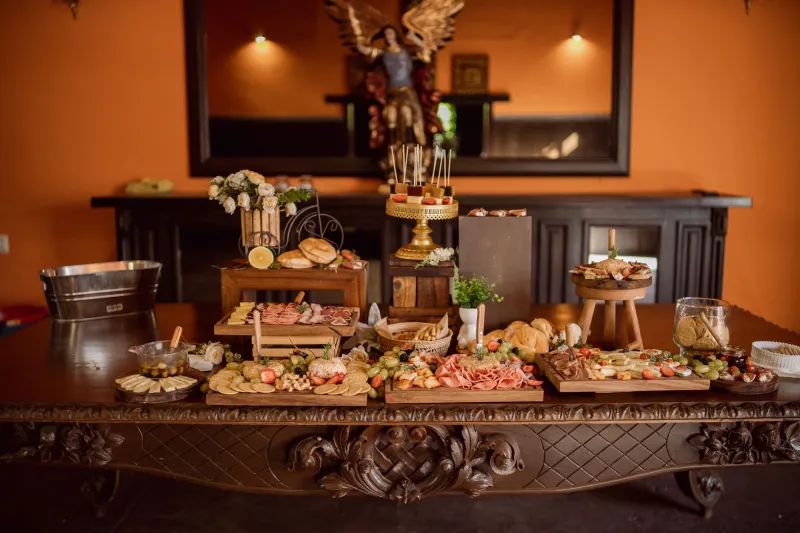
"My daughter wanted a grazing table with charcuterie," says Harpreet Bains, a mother of the bride from the Chicago suburbs who we spoke to ahead of her daughter Navneet's wedding last fall. "I said, 'What is charcuterie doing at a Punjabi mehendi?' She said, 'Mom, half my friends don't eat meat.' And then I had to think about it."
That's the tension in a single conversation. Navneet's wedding ultimately featured a hybrid spread — classic aloo tikki chaat and dahi bhalle sat alongside a build-your-own grain bowl station. There were two types of lassi. There was also, yes, a small charcuterie board.
"Everyone ate everything," Harpreet admits. "I was wrong to fight it."
The Catering Side of the Culture Clash
Caterers who specialize in South Asian events across the US say they've seen a significant shift over the past five to seven years. It's not just about adding a vegetarian option anymore — it's a complete rethinking of how the menu is structured.
Rajinder "Raj" Sandhu runs a catering company out of the greater Dallas area that handles about 40 to 50 Punjabi weddings per year. He says roughly 60 percent of his current clients are second-generation families where at least one side of the wedding party has specific dietary requirements that would have been almost unheard of a generation ago.
"I'm making vegan saag now," he says. "No butter, no cream. I use cashew cream and a really good mustard oil base. Honestly? It works. It tastes great. But ten years ago, if I told a Punjabi aunty I was making saag without makhan, she would have walked out of the room."
Raj has also started offering what he calls a "heritage tier" — dishes that are deliberately old-school, sourced as close to traditional technique as possible. Think hand-pounded chutneys, slow-cooked daal that takes the better part of a day, and mithai made in-house rather than ordered from a sweets shop. For families where preserving culinary authenticity is the priority, this tier has become a selling point.
"There's a real hunger — no pun intended — for the food that tastes like home," he says. "And for a lot of these second-gen couples, home is something they're trying to reconstruct, not just remember."
Budget Realities Nobody Talks About Out Loud
Here's the part that doesn't make it onto the wedding Instagram: Punjabi American weddings are expensive, and food is one of the biggest line items. In major metro areas, a full multi-day wedding with traditional catering can easily run $150 to $300 per head — and that's before you factor in the separate mehendi and sangeet spreads.
For younger couples who are often financing a significant portion of the celebration themselves, the pressure to deliver a "proper" Punjabi wedding while managing real financial constraints is genuine.
"We had to make choices," says Arjun Grewal, who got married in New Jersey two years ago. "We wanted the full traditional setup for the main wedding day — that was non-negotiable for both our families. But for the mehendi, we actually did a lot of it ourselves. We made the chaat at home. My mom and aunties cooked for two days straight."
For Arjun's family, that DIY approach ended up becoming the most talked-about part of the weekend. "People kept saying it tasted like real home cooking. Because it was."
Not every family has that option, of course. But it points to something interesting — the most meaningful wedding food moments often aren't the ones that cost the most.
Sustainability Enters the Chat
A newer conversation entering the Punjabi American wedding space is sustainability — specifically, food waste. Traditional Punjabi hospitality operates on the principle of abundance. You don't run out of food. Ever. The social shame of a half-empty serving tray is real and deeply felt.
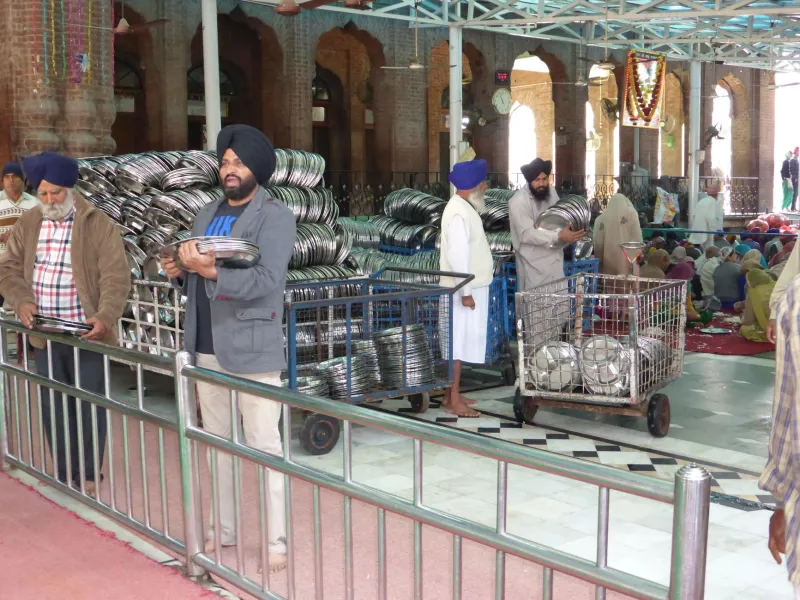
But that cultural imperative often results in staggering amounts of food waste at large events. A growing number of families are working with caterers and local organizations to donate surplus food after celebrations — something that, interestingly, connects back to the langar tradition of community feeding.
"I always tell my clients, the spirit of Punjabi hospitality isn't about excess," says Simran. "It's about making sure nobody leaves hungry. There's a difference. And once families hear it framed that way, they're usually open to planning smarter."
The Food Is the Story
At the end of the day — or the end of a very long wedding weekend — what families keep coming back to is this: the food is how culture gets passed down. It's not just fuel for dancing. It's the thread connecting a grandmother's kitchen in Punjab to a banquet hall in Naperville or Fremont or Sugar Land.
The couples who navigate the wedding menu wars most successfully, planners say, are the ones who treat the food as a genuine conversation rather than a battleground. Who ask their elders what dishes carry meaning, and who also bring their own preferences to the table — literally.
Navneet Bains, the bride from Chicago, put it simply: "I wanted my wedding food to taste like my whole life. The food I grew up eating at home, the food I eat now with my friends. Why should I have to choose?"
She didn't. And judging by the empty serving trays at the end of the night, neither did her guests.