Perfectly Round, Perfectly Stressed: The Roti Pressure That's Following Punjabi Americans Into Adulthood
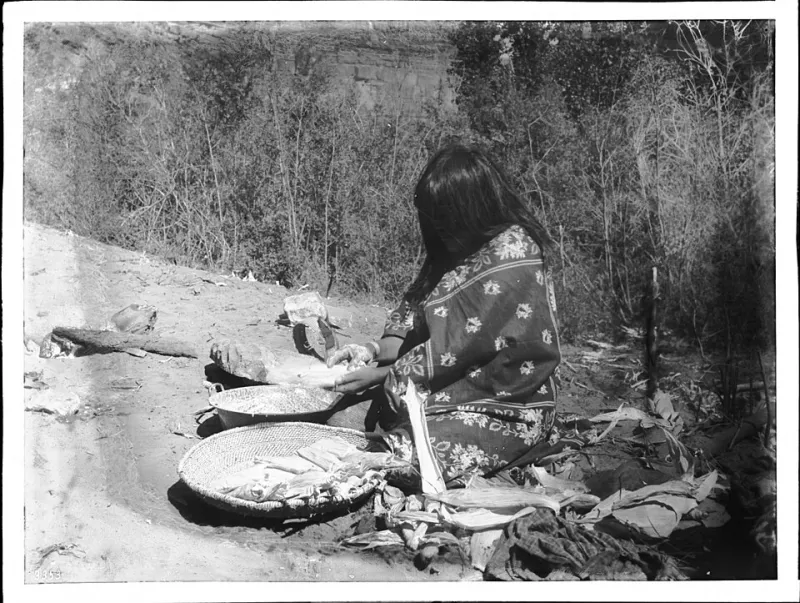
Photo: C. C. Pierce, Public domain, via Wikimedia Commons
Let's be honest about something. The roti is never just the roti.
It is, depending on the day and the family dynamic, a measure of your cultural commitment, a silent referendum on how well your mother raised you, and occasionally the subject of a group chat thread that goes forty-seven messages deep. Punjabi Americans across the country will tell you — with varying degrees of laughter and genuine emotion — that no single kitchen skill carries more weight than the ability to produce a round, soft, properly puffed flatbread on demand.
This is the roti situation. And a lot of people are quietly struggling with it.
The Geometry of Belonging
Ask any Punjabi American woman in her twenties or thirties about learning to make roti, and watch what happens to her face. There's usually a pause. Sometimes a laugh that comes out a little too quickly. Then the story.
Maya Sandhu, 29, grew up in Sacramento and now lives in Chicago. She describes the first time she made roti for her in-laws as "genuinely one of the most stressful experiences of my adult life, and I defended a master's thesis."
"It came out in the shape of — I don't know — the state of Texas? And my mother-in-law didn't say anything. She just looked at it. That silence was louder than anything she could have said."
This is a story with a thousand variations. The shape changes — sometimes it's Australia, sometimes it's a very aggressive amoeba — but the emotional architecture is the same. The roti becomes a stand-in for a much larger question: Am I Punjabi enough?
And that question, as anyone who has wrestled with diaspora identity will tell you, doesn't have a clean answer.
Why Roti Specifically?
Punjabi cuisine is full of complex dishes. Sarson da saag takes hours. A proper dal makhani requires patience most of us have to consciously cultivate. So why does roti — technically a simple unleavened flatbread — carry so much symbolic weight?
Part of it is visibility. Roti is made fresh, often daily, often in front of other people. It's not something you can prep in advance and hope nobody notices the imperfections. The rolling pin goes out, the tava heats up, and suddenly your cultural credentials are on display in real time.
Part of it is also what roti represents in the Punjabi household. It's not a side dish. It's the meal. It's what holds everything together — literally and metaphorically. A mother who made roti for her family three times a day for decades built something into that act that goes far beyond nutrition. She built a language. And when that language doesn't transfer cleanly to the next generation, it stings on both sides.
"My mom never had to think about how to make roti," says Jaspreet Grewal, 34, a nurse in New Jersey whose parents immigrated from Amritsar. "Her hands just knew. I have to actively concentrate every single time. It feels like I'm speaking a language I only half-learned."
The Tools Are Not the Enemy (Mostly)
Here's some news that will upset exactly one type of auntie: modern kitchen tools can actually help, and using them does not mean you've failed.
The roti press — long considered a kind of culinary cheat code — has been quietly rehabilitated in many households. For people with arthritis, limited wrist mobility, or genuinely demanding schedules, it's a practical solution that still results in homemade flatbread. The texture isn't identical to hand-rolled, but it's significantly closer to the real thing than anything from a package.
There are also electric roti makers that have gotten genuinely decent reviews from home cooks who use them as a starting point while building their technique. Think of them the way a new swimmer thinks about floaties: not the destination, but a useful bridge.
For those who want to build actual skill, the advice from experienced cooks is remarkably consistent: practice on days when nothing is at stake. Don't attempt your first solo roti for a dinner party. Don't make it for your mother-in-law's first visit. Make it on a Tuesday when you're the only one home and the stakes are zero.
"I made roti every day for a month before I let anyone see it," says Harleen Brar, 41, who runs a Punjabi cooking account on Instagram out of Dallas. "By the end of the month, I wasn't thinking about the shape anymore. My hands were starting to remember."
The Virtual Kitchen Is Actually Working
One unexpected gift of the last few years has been the rise of virtual cooking mentorships — and for roti specifically, they've been surprisingly effective.
Several Punjabi American community organizations now run online cooking sessions where older, experienced cooks work one-on-one or in small groups with younger learners over video call. The format sounds low-tech, but participants consistently describe it as transformative.
"Watching my nani make roti in person, I could never see what her hands were doing," says Divneet Kaur, 26, who lives in Atlanta and has been doing weekly video calls with her grandmother in Patiala. "On video, I can ask her to slow down. I can zoom in. I can replay it. It's actually better than being in the kitchen with her."
There's also something emotionally significant about the format. For second-generation kids who may not speak Punjabi fluently, or who feel a distance from their heritage that they can't quite articulate, cooking together across a screen creates a connection that conversation alone sometimes doesn't.
Rewriting the Rubric
Maybe the most useful shift happening in Punjabi American households right now is a quiet renegotiation of what roti-making actually means.
The old framework — round equals good, anything else equals failure — is starting to loosen. Younger cooks are pushing back on the idea that a slightly irregular flatbread is evidence of cultural inadequacy. They're making the argument, with some success, that the act of making roti matters more than the geometry of the result.
"I told my daughter her roti looks like a map of the world," says Gurinder Sidhu, 58, a mother of three in Naperville, Illinois. "She said, 'Exactly, Mom. It contains multitudes.' I didn't know what that meant but I laughed, and we ate the roti, and it tasted fine."
It tasted fine. It tasted like something she made. It tasted like a kitchen in Naperville that smells, on a Sunday evening, a little bit like Punjab.
That's not nothing. That might actually be everything.
Want to connect with experienced Punjabi home cooks for virtual roti lessons or cooking mentorships? Punjab Bazar's community directory can help you find your people — wherever in America you happen to be rolling your dough.