The Hands That Feed Everyone Else: Unpaid Culinary Labor at Punjabi American Celebrations
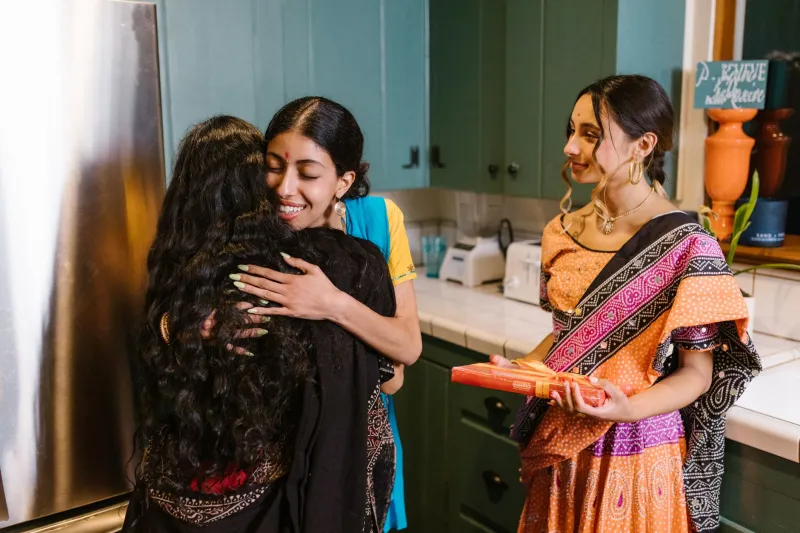
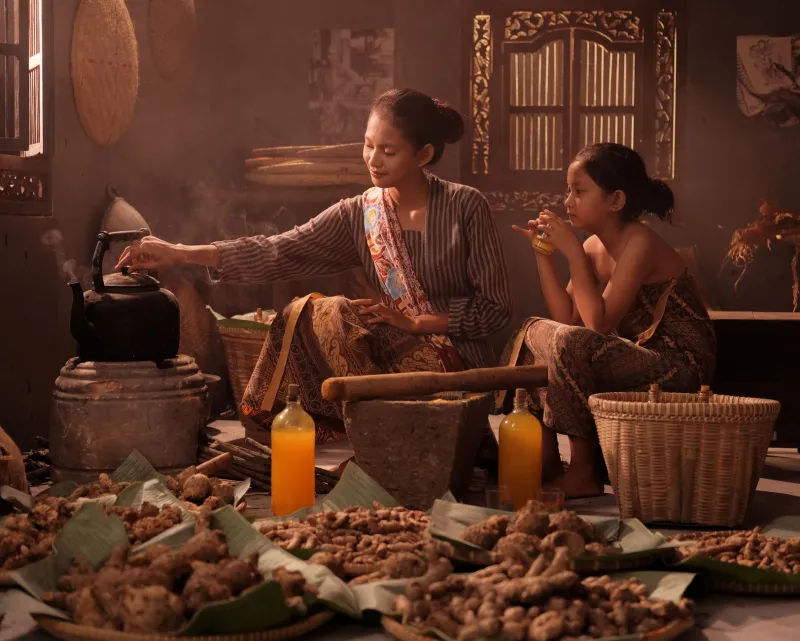
The wedding was in Fremont, California. Three hundred guests, a rented banquet hall, a DJ, a professional photographer, and a catering contract that covered the main buffet. What the contract didn't cover — and what nobody talked about openly — was the dozen women who had been in Simran Brar's mother's kitchen since five in the morning, rolling pinni, frying mathri, and stirring enormous pots of halwa. They would be there until midnight. None of them would be paid.
"My maasi drove forty minutes each way, was on her feet for sixteen hours, and brought half her own ingredients," says Simran, 34, a project manager in the Bay Area. "At the end of the night, someone handed her a box of mithai as a thank-you. That was it."
This is not an unusual story. Across Punjabi American communities — in Yuba City, in Surrey, in Brampton, in every zip code where Punjabi families have planted roots — there exists a parallel economy of culinary labor that never shows up on any invoice. It is performed almost entirely by women. And it is, by almost every measure, invisible.
What the Catering Contract Doesn't Include
Punjabi celebrations are, by their very nature, food-intensive. A wedding without homemade dal makhani feels incomplete to many families. A baby shower without handmade ladoo feels like something is missing. A Sukhmani Sahib path without a full langar spread prepared by aunties who have been making it for decades — unthinkable in many households.
The result is that professional catering and home cooking often coexist at the same event. The caterers handle the formal meal. The women handle everything else: the welcome snacks, the religious offerings, the sweets tied to specific rituals, the chai that flows constantly for three days. These contributions are substantial. In terms of sheer hours and ingredient costs, they can rival or exceed what the hired vendors provide.
But they are categorized differently — as love, as duty, as just what you do.
"There's this idea that if you really care about the family, you cook for them," says Dr. Harpreet Gill, a sociologist at UC Davis who studies gender and labor in South Asian diaspora communities. "And that framing conveniently transfers the economic cost of feeding hundreds of people onto the emotional shoulders of women who can't say no without being seen as cold or selfish."
Who Gets Asked, and Who Doesn't
The gendered dimension of this is hard to miss once you start looking. Men in Punjabi American families are often celebrated for their contributions to events — the uncle who organized the sound system, the cousin who handled the venue logistics, the father who wrote the checks. These roles are visible, named, and praised publicly.
Women's contributions tend to be absorbed into the background. "Nobody announces at the reception that Biji woke up at four AM to make saag for two hundred people," says Navneet Dhaliwal, 41, a nurse in Stockton who has cooked at more family events than she can count. "They just expect it to be there, warm, ready, delicious. And it always is. Because we always show up."
The expectation also travels across generations in ways that male responsibilities often don't. Young Punjabi American women describe being recruited into kitchen labor at family events starting in their early teens — peeling, chopping, stirring, learning the recipes not as a choice but as a rite of passage with invisible fine print attached. Their brothers, in many of the same households, were not.
The Toll Nobody Totals
The economic cost is real, even if it's never calculated. Women contributing to family events often purchase ingredients themselves, spend vacation days or personal time off in preparation, and absorb the physical wear of cooking at scale in home kitchens not designed for it. A back that aches for a week after rolling dough for hours. Hands cracked from washing dishes in cold water at two in the morning. These are not abstract concerns.
The emotional weight compounds the physical. Declining to participate — or even asking to be compensated — risks social consequences that men in the same family rarely face. "If I said I couldn't come cook for my cousin's wedding, I would be talked about for years," says Jaspreet Kaur, 29, a software engineer in Seattle. "My uncle didn't show up to help set up and nobody said a word."
Therapists working with Punjabi American women note that resentment around this dynamic is common but rarely expressed directly. "It builds up over years, over dozens of events," says one therapist who works with South Asian clients in the Dallas area and asked not to be named. "By the time women feel comfortable naming it, they've often been doing it for decades."
Women Who Are Changing the Equation
Some Punjabi American women are quietly — and sometimes not so quietly — opting out or renegotiating the terms.
Amrita Sandhu, 38, who lives outside Chicago, made a decision after her sister's wedding that she would no longer contribute unpaid kitchen labor to any event where professional vendors were being paid. "If there's a DJ getting a check, I am not making three hundred samosas for free. I'll happily contribute money toward catering. I will not contribute my body and my time while everyone else is compensated."
She acknowledges the social friction this created. "There were comments. There were looks. But I also noticed that nobody stopped eating the food at the next event — food that was catered, that I helped pay for. The food got made. It always gets made. The question is just who bears the cost."
Other women are finding middle ground: showing up to cook but setting clear limits on hours, asking explicitly that their contributions be acknowledged publicly, or organizing collectively with other women in their family to share the load more equitably.
A growing number of Punjabi American families are also making deliberate choices to hire professional South Asian caterers — many of them women-owned businesses — precisely to remove the informal labor expectation from family members. "We hired a Punjabi caterer for my mom's 60th birthday," says one woman in the Sacramento area. "It felt weird at first. But my aunts got to actually sit at the party. They got to eat. They danced. It was the first time I'd seen them enjoy an event instead of work through it."
What We Owe the Hands That Feed Us
Punjabi food culture is extraordinary. The flavors, the generosity, the sheer abundance of a well-laid dastarkhwan — these are things worth celebrating, worth preserving, worth building a whole community around. Punjab Bazar exists because that food matters, because it carries memory and identity and love.
But food doesn't appear by magic. It comes from labor. And when that labor is consistently extracted from one group of people — without pay, without recognition, without the option to decline — calling it love doesn't make it fair. It just makes it easier to ignore.
The women who have been feeding our communities for generations deserve more than a box of mithai at the end of a sixteen-hour day. They deserve to be seen. They deserve to be thanked — loudly, specifically, publicly. And increasingly, they deserve to be asked whether they want to do it at all.
Because the best food always comes from someone who chose to make it.